
Attic AC Drain Clogs: Why Central Florida Ceilings Collapse and How to Fix It
In Central Florida, central air conditioning runs almost non-stop. As your AC cools humid air, it pulls an astonishing 5 to 20 gallons of water condensation daily. When the narrow 3/4-inch PVC drain line clogs with algae slime, that water has nowhere to go but into your attic insulation and through your drywall ceiling. Here is the technical breakdown of condensate physics, secondary pan overflows, Safe-T-Switch float sensors, and attic joist structural drying.
📋 Table of Contents & Technical Navigation
- Enthalpy & Daily Condensation Production Rates in Florida
- The Microbiology of Condensate Drain Blockages (Zooglea Slime)
- The Physics of Attic Ceiling Sheetrock Collapse
- The Monthly 1-Cup Distilled Vinegar Maintenance Protocol
- Safe-T-Switch Electronic Float Sensors: Installation & Code
- Emergency Attic Joist Drying & Drywall Reconstruction Sequence
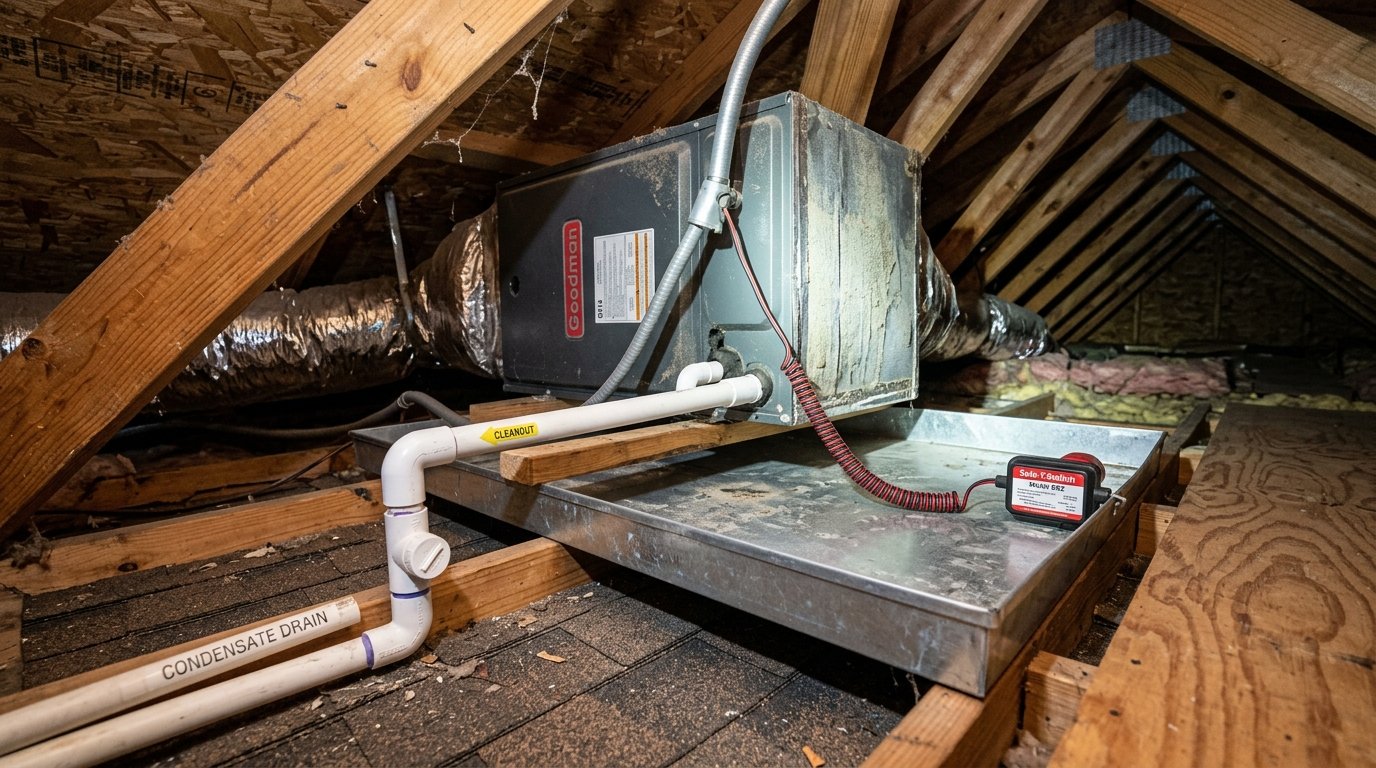
1. Enthalpy & Daily Condensation Production Rates in Florida
Central Florida's subtropical climate produces extreme atmospheric moisture levels. A standard 3-to-5 ton residential split AC system operates under high latent heat loads:
- Daily Condensation Production: As warm 80°F+ indoor air with 65% relative humidity passes across the 45°F evaporator coil, water vapor condenses rapidly, generating between 5 and 20 gallons of water every 24 hours.
- Continuous Gravity Flow: This continuous stream of water drains through a narrow 3/4-inch schedule 40 PVC pipe into exterior soffits or plumbing sewer stacks.
2. The Microbiology of Condensate Drain Blockages (Zooglea Slime)
The warm, dark environment inside an attic PVC drain line is an ideal incubator for biological sludge:
- Algae, Fungal Zooglea & Bacterial Slime: Airborne dust combines with evaporator coil condensation to form thick, gelatinous slime plugs in the PVC trap.
- Sediment Hardening: During cooler winter months when systems cycle less frequently, standing water in the drain trap dries out, turning dust into solid sediment plugs.
- Improper Drain Line Slope (P-Trap Sag): In older homes, sagging PVC drain lines create negative slope pockets where sediment settles and chokes water flow.
💡 Field Tip: The $35 Float Switch Investment
Installing an inexpensive $35 Safe-T-Switch magnetic float sensor on your secondary drain pan is the single best investment a Florida homeowner can make. If the drain clogs, the float rises and instantly cuts power to the AC before a single drop hits your ceiling.
3. The Physics of Attic Ceiling Sheetrock Collapse
When the primary drain line clogs, water backs up into the secondary emergency drain pan beneath the indoor air handler. If the secondary pan is cracked, unlevel, or lacks a functioning float switch, water overflows into attic fiberglass insulation.
Fiberglass insulation absorbs water up to 10 times its dry weight. A saturated 4x8-foot section of ceiling insulation can weigh over 120 pounds. The wet 1/2-inch gypsum drywall loses tensile strength, pulling through drywall screw heads and suddenly collapsing into bedrooms or living areas below.

4. The Monthly 1-Cup Distilled Vinegar Maintenance Protocol
Homeowners can prevent 95% of AC drain line clogs with a simple monthly routine:
- Locate the T-shaped PVC cleanout port on the drain line near your indoor air handler.
- Remove the cap and pour 1 cup of distilled white vinegar into the line.
- Let the mild acetic acid sit for 30 minutes to dissolve algae, bacterial slime, and mineral scale.
- Flush with 2 cups of warm water to confirm clean exterior drainage.

5. Safe-T-Switch Electronic Float Sensors: Installation & Code
Florida Building Code (Mechanical Section 307.2.3) requires primary and secondary condensation drainage protection. An inline electronic float switch (such as the Safe-T-Switch SS1 or SS2) is installed directly into the secondary drain port of the evaporator coil. If water rises, a magnetic switch trips, shutting off the 24V thermostat signal and stopping condensation production immediately.
6. Emergency Attic Joist Drying & Drywall Reconstruction Sequence
If an AC overflow has already stained or compromised your ceiling, our rapid emergency protocol includes:
- Extract Saturated Insulation: Wet blown-in or batt insulation is vacuumed out to eliminate ceiling collapse weight.
- Dry Attic Joists & Trusses: High-velocity centrifugal air movers dry structural wood framing to prevent dry rot. Visit our Attic Water Damage Cleanup Services.
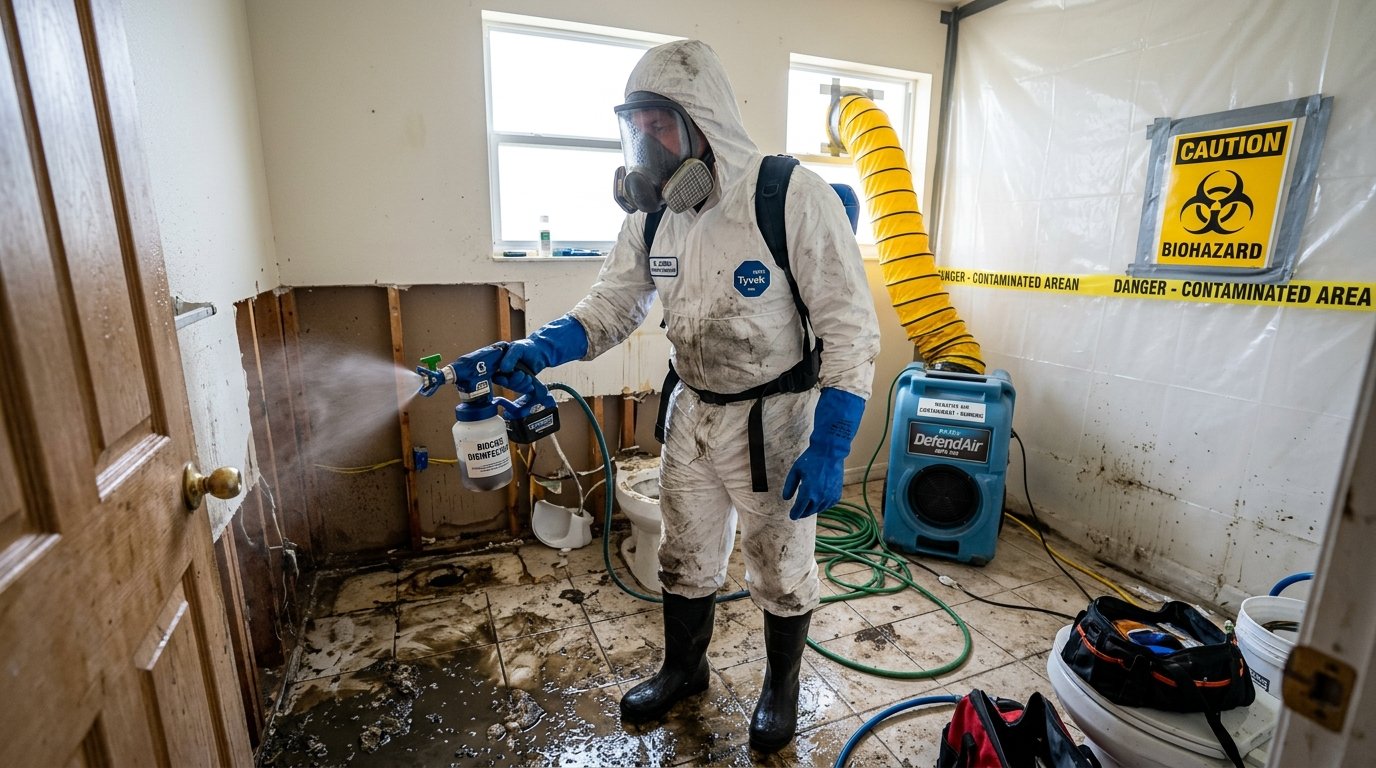
- Antimicrobial Sanitization: EPA biocides are applied to prevent mold colonization on ceiling drywall backing.
- Turnkey Ceiling Rebuild: Damaged drywall sections are cleanly cut, replaced, taped, textured, and painted to pre-loss perfection.
Frequently Asked Questions (Field Insights)
A typical 3-to-4 ton central air conditioning system in Central Florida removes between 5 and 20 gallons of water condensation from indoor air every single day during hot, humid summer months.
An emergency float switch is a safety sensor installed on the secondary drain pan or drain line. If water backs up, the float rises and instantly shuts off the AC unit, preventing ceiling water leaks.
Distilled white vinegar is recommended over bleach. Strong bleach can erode plastic drain pans, corrode copper evaporator coils, and emit harsh chlorine fumes through your indoor air distribution ducts.
Yes. Most Florida HO-3 policies cover the resulting ceiling water damage, insulation extraction, structural joist drying, and drywall rebuild caused by sudden AC drain overflows.

Dealing with Water Damage in Sanford Right Now?
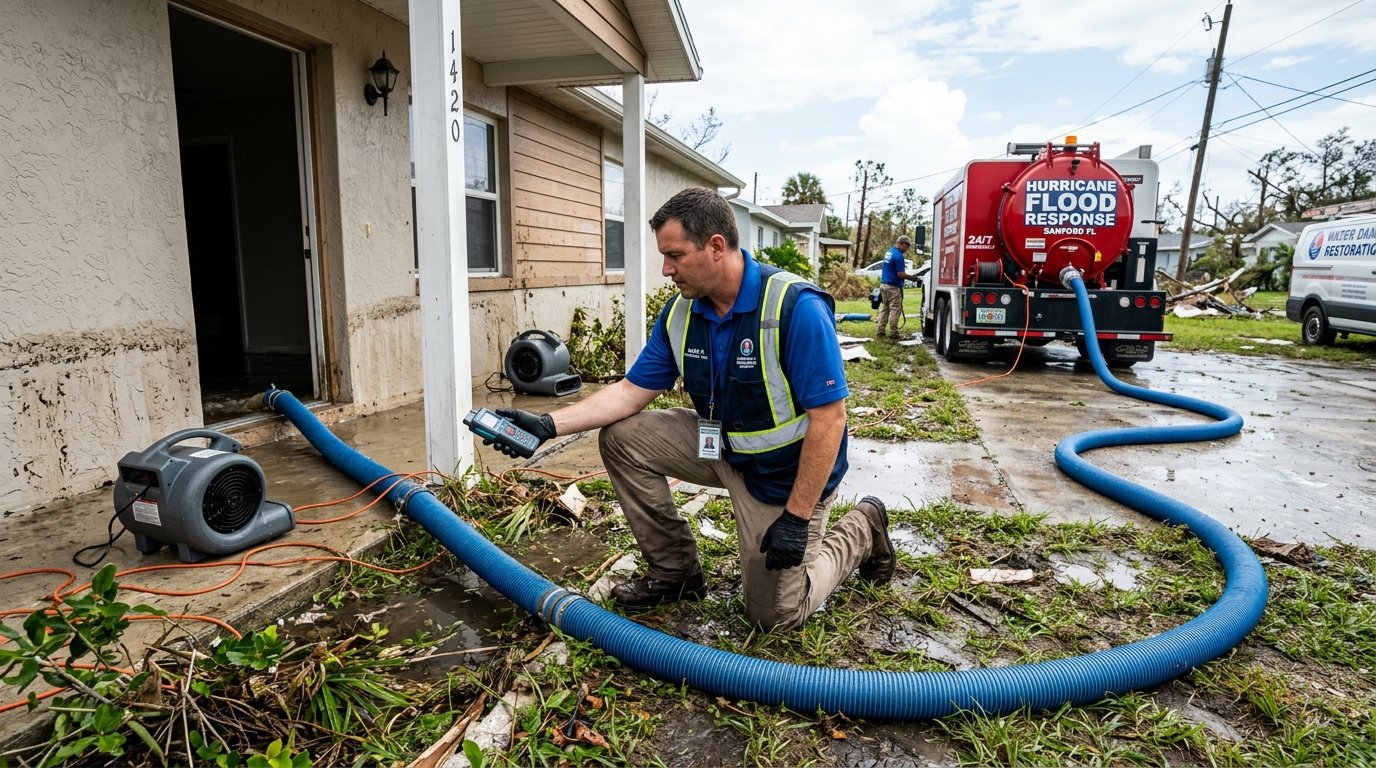
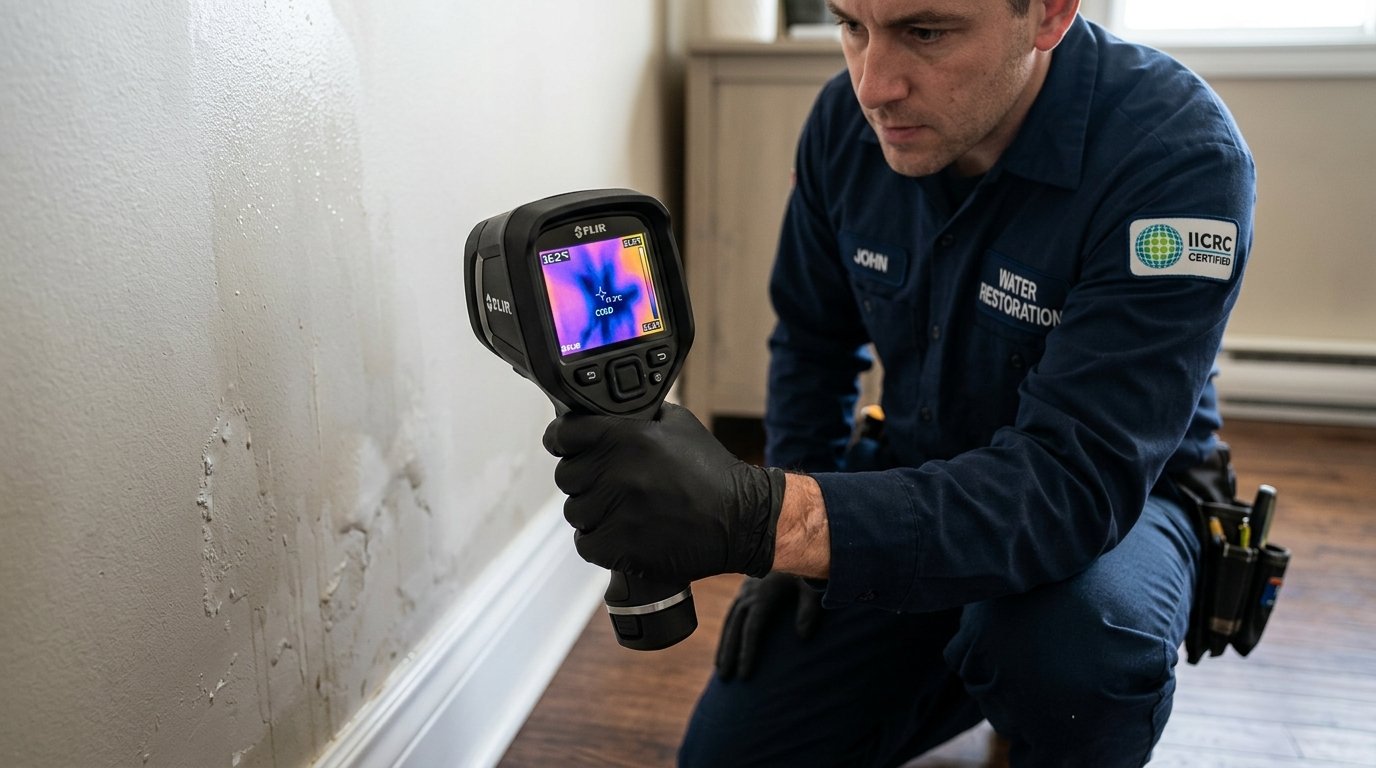
Don't wait for moisture to turn into structural mold. Our certified response team arrives on-site in 30 minutes across Seminole County with truck-mounted extractors, thermal cameras, and industrial drying equipment.
Call 24/7 Emergency Dispatch: (407) 871-3490