
The 48-Hour Mold Window: How to Stop Toxic Fungi After a Florida Water Leak
In Central Florida’s hot, humid climate, water damage and toxic mold growth happen fast. Microscopic fungal spores float in indoor air naturally. But when sheetrock, wood baseboards, or carpet backing stay damp for just 24 to 48 hours, those spores germinate into active colonies, eating the drywall paper and releasing toxic mycotoxins. Here is the technical guide on fungal biology, containment engineering, and why bleach makes mold worse on porous structural framing.
📋 Table of Contents & Technical Navigation
- The 24-to-48 Hour Fungal Germination Timeline in Florida
- Common Toxic Florida Indoor Mold Strains (Stachybotrys & Aspergillus)
- The Bleach Fallacy: Why Sodium Hypochlorite Fails on Porous Framing
- The 3 Pillars of Professional Fungal Prevention
- Negative Pressure Containment & HEPA 500 Filtration Physics
- Clearance Testing: Particle Counters & Spore Trap Air Quality Tests
1. The 24-to-48 Hour Fungal Germination Timeline in Florida
Mold spores need three things to grow: moisture, organic cellulose food (drywall paper, wood framing, carpet backing), and warmth (above 70°F). In Florida:
- 0 to 24 Hours: Water saturates materials; relative humidity inside wall cavities surges past 85%.
- 24 to 48 Hours: Dormant mold spores germinate, extending microscopic root structures (hyphae) deep into porous drywall paper and wood grain.
- 48 to 72 Hours: Visible fungal colonies form, releasing volatile organic compounds (musty odors) and airborne mycotoxins that trigger respiratory distress, asthma attacks, and chronic allergies.
💡 Field Tip: The Sub-50% Humidity Rule
Mold spores cannot germinate if ambient relative humidity is kept below 50%. During active drying, our commercial LGR dehumidifiers maintain indoor relative humidity between 30% and 40%, depriving dormant spores of the atmospheric moisture required to reproduce.
2. Common Toxic Florida Indoor Mold Strains (Stachybotrys & Aspergillus)
Microbiological lab tests in Central Florida water-damaged buildings frequently identify four major fungal genera:
| Mold Genus | Appearance | Where It Grows | Health Risks |
|---|---|---|---|
| Stachybotrys Chartarum | Dark black, slimy or powdery. | High-cellulose drywall backing, ceiling sheetrock. | Releases satratoxin mycotoxins; respiratory distress, chronic headaches. |
| Aspergillus / Penicillium | Green, blue, white, or powdery grey. | Carpeting, wood framing, drywall paper. | High allergenicity; triggers acute asthma attacks and allergic sinusitis. |
| Cladosporium | Olive-green to brown/black spots. | AC fiberglass ductwork, baseboards. | Causes eye irritation, skin rashes, and nasal congestion. |
3. The Bleach Fallacy: Why Sodium Hypochlorite Fails on Porous Framing
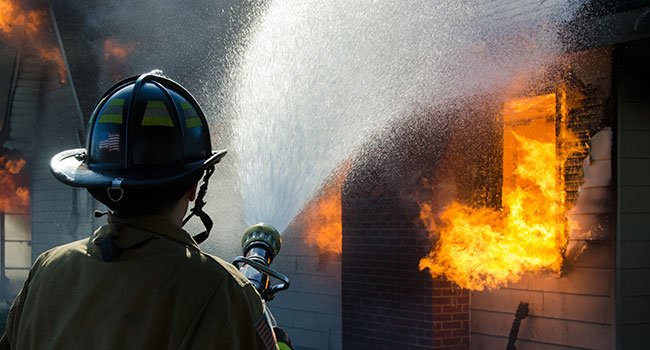
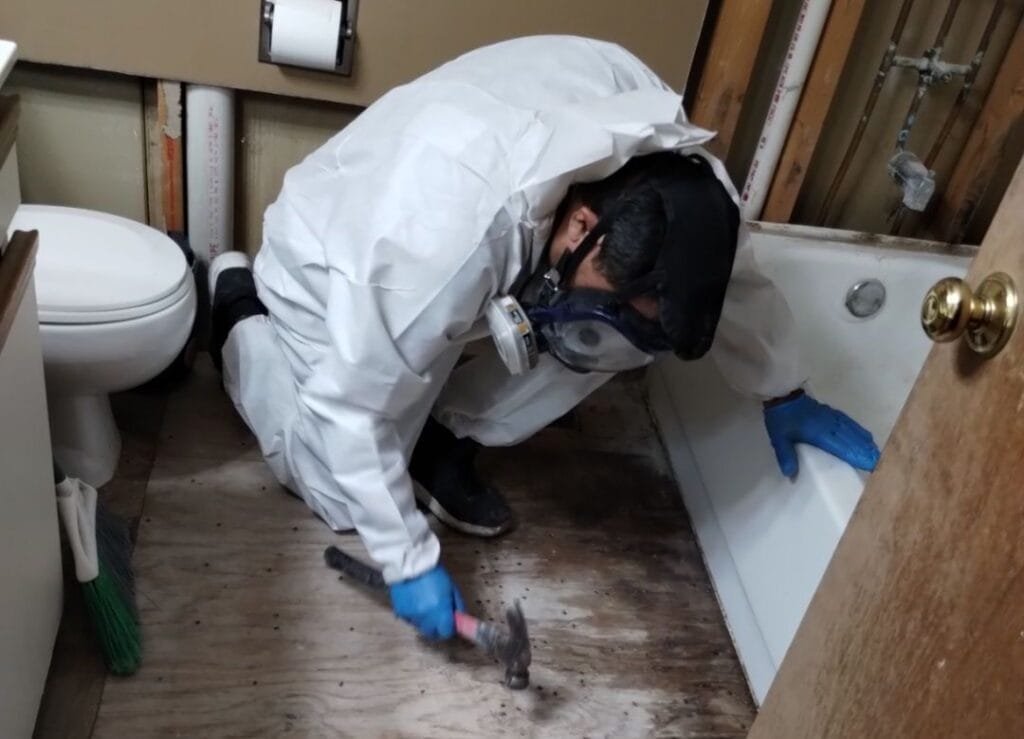
The EPA and OSHA explicitly advise against using household bleach on drywall, wood framing, and subfloors. Bleach is 90%+ water; the surface chlorine evaporates in minutes, while water soaks deeper into the drywall, feeding the mold roots underneath and causing colonies to return stronger within days!
4. The 3 Pillars of Professional Fungal Prevention
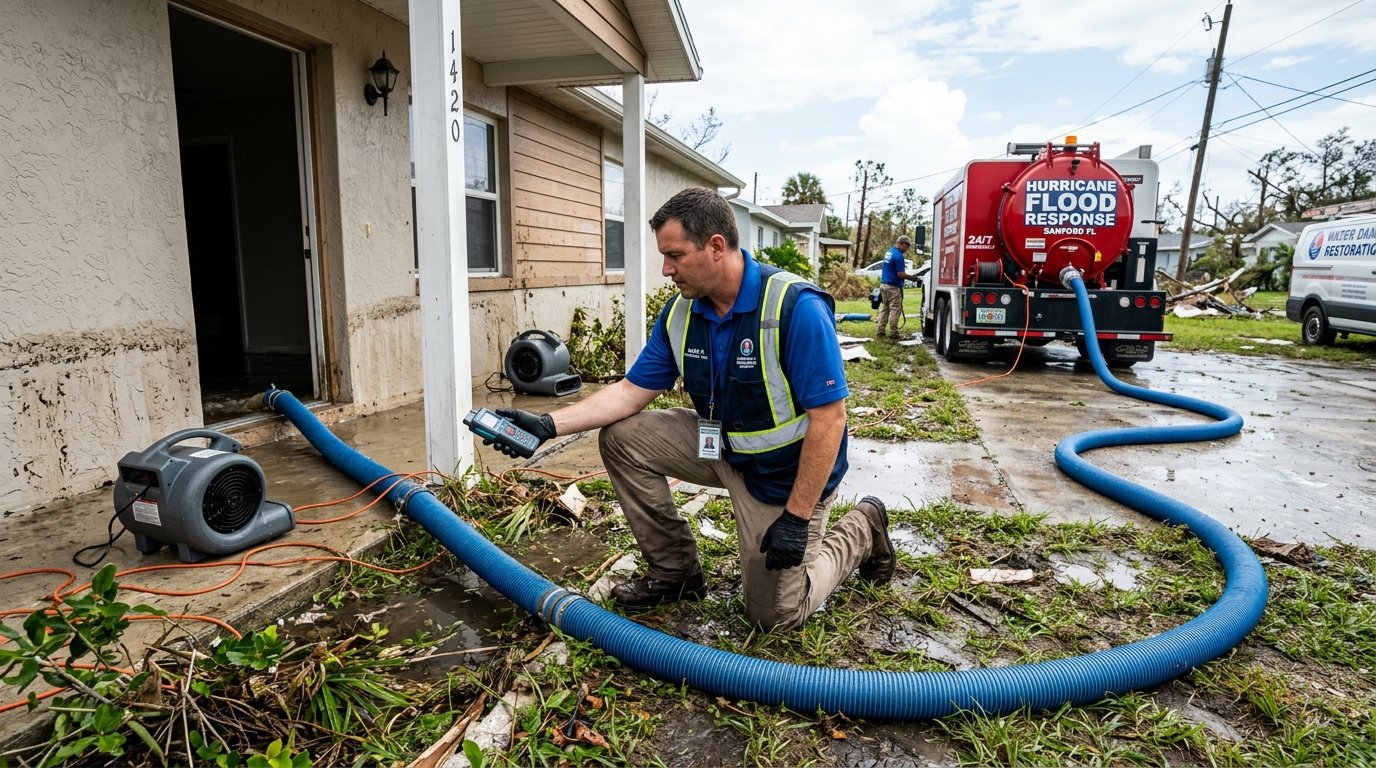
- Extract Standing Water Immediately (< 2 Hours): High-volume truck-mounted extraction removes liquid water before it wicks deep into structural framework.
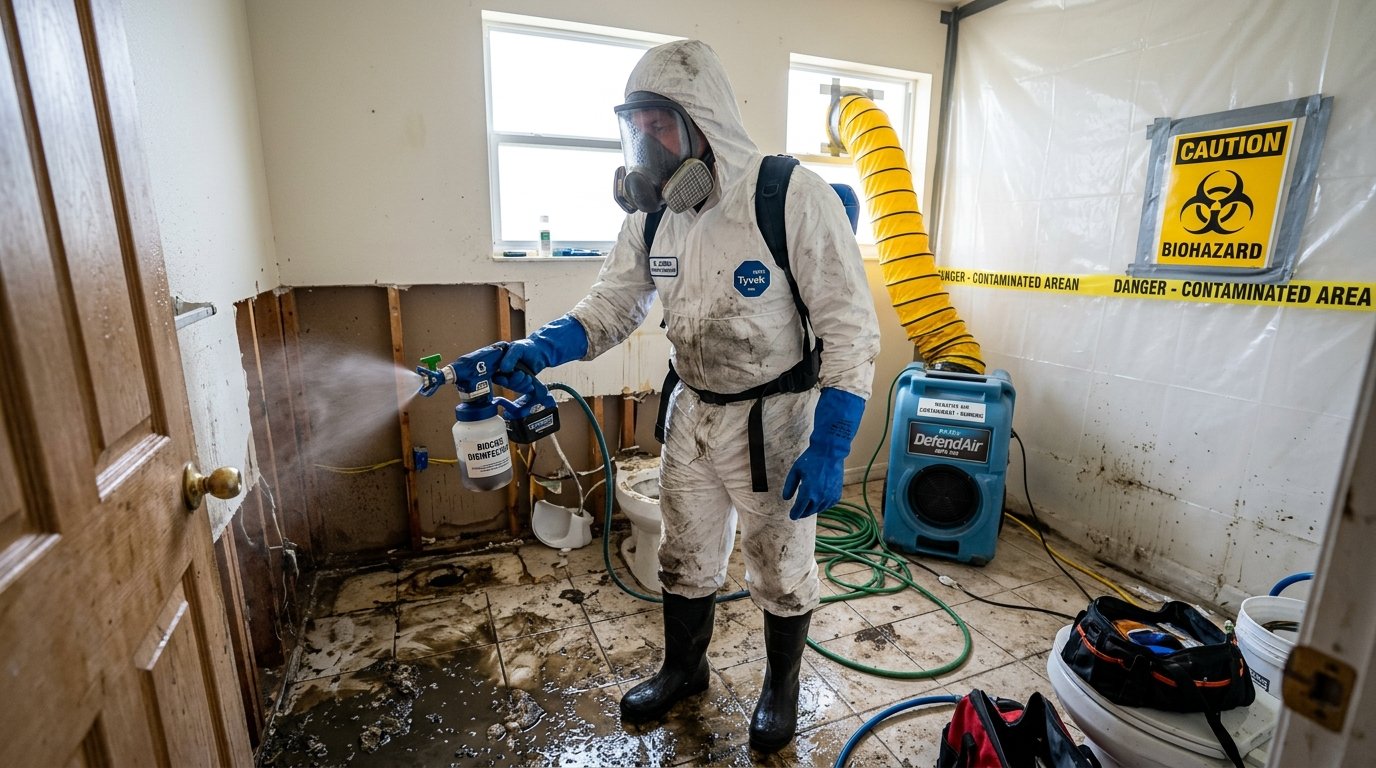
- Apply EPA-Registered Botanical Biocides: Botanical biocides (thymol-based) sanitize framing without leaving harsh toxic chemical fumes.
- Aggressive Dehumidification (Target RH < 45%): Commercial LGR dehumidifiers pull relative humidity below 45%, stopping spore reproduction dead in its tracks.
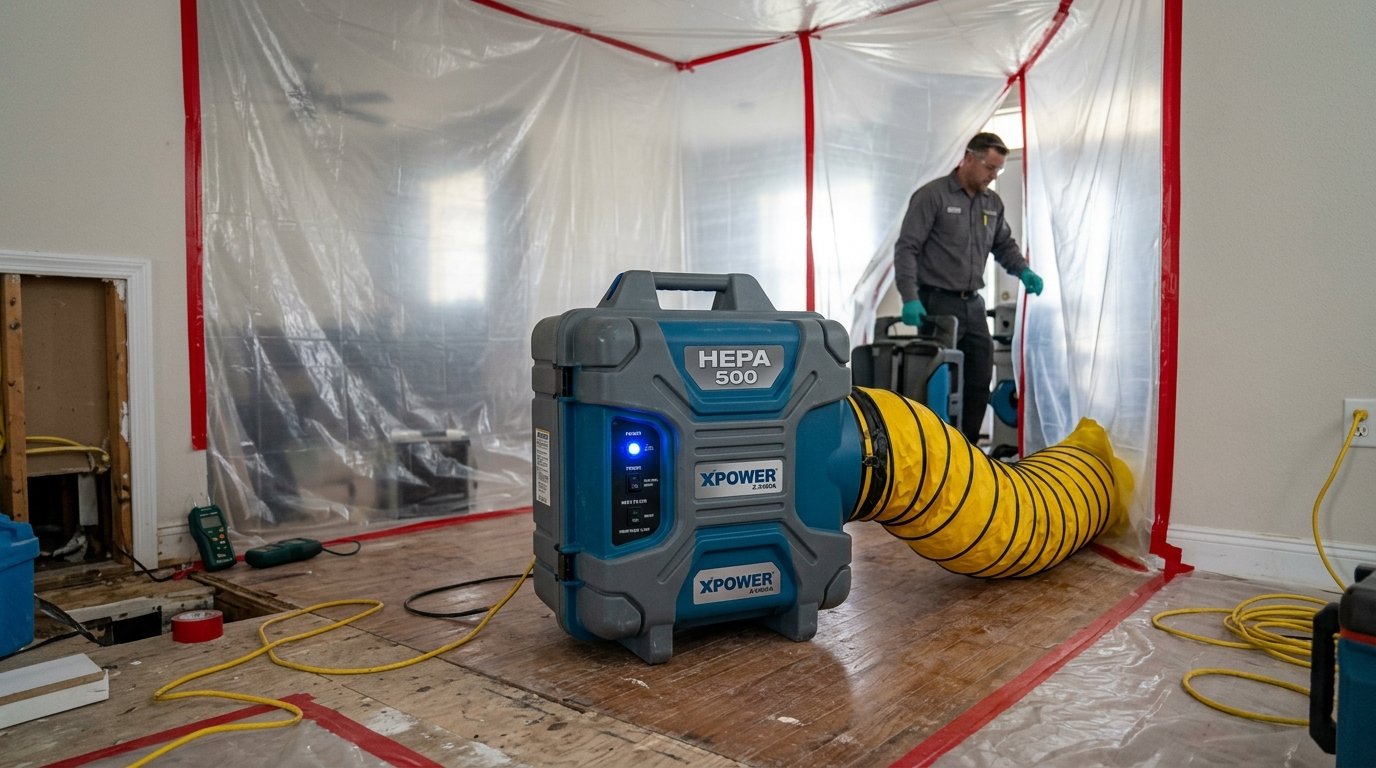
5. Negative Pressure Containment & HEPA 500 Filtration Physics
If moisture was undiscovered for more than 24 hours, technicians place HEPA 500 Air Scrubbers. These industrial filtration machines cycle room air through three-stage filters, capturing 99.97% of airborne mold spores down to 0.3 microns and exhausting purified air to prevent spore migration into other rooms.
6. Clearance Testing: Particle Counters & Spore Traps
Before signing off on mitigation, independent indoor air quality testing can be performed using laser particle counters and Air-O-Cell spore trap cassettes. Clearance is achieved when indoor spore counts match or are lower than outdoor baseline levels.
Frequently Asked Questions (Field Insights)
No. The EPA and OSHA advise against bleach on porous surfaces. Bleach consists mostly of water; the chlorine evaporates on the surface while water penetrates the drywall, feeding the mold roots underneath.
Maintaining indoor relative humidity below 50% stops mold spores from germinating. During active restoration, commercial dehumidifiers maintain humidity between 30% and 40%.
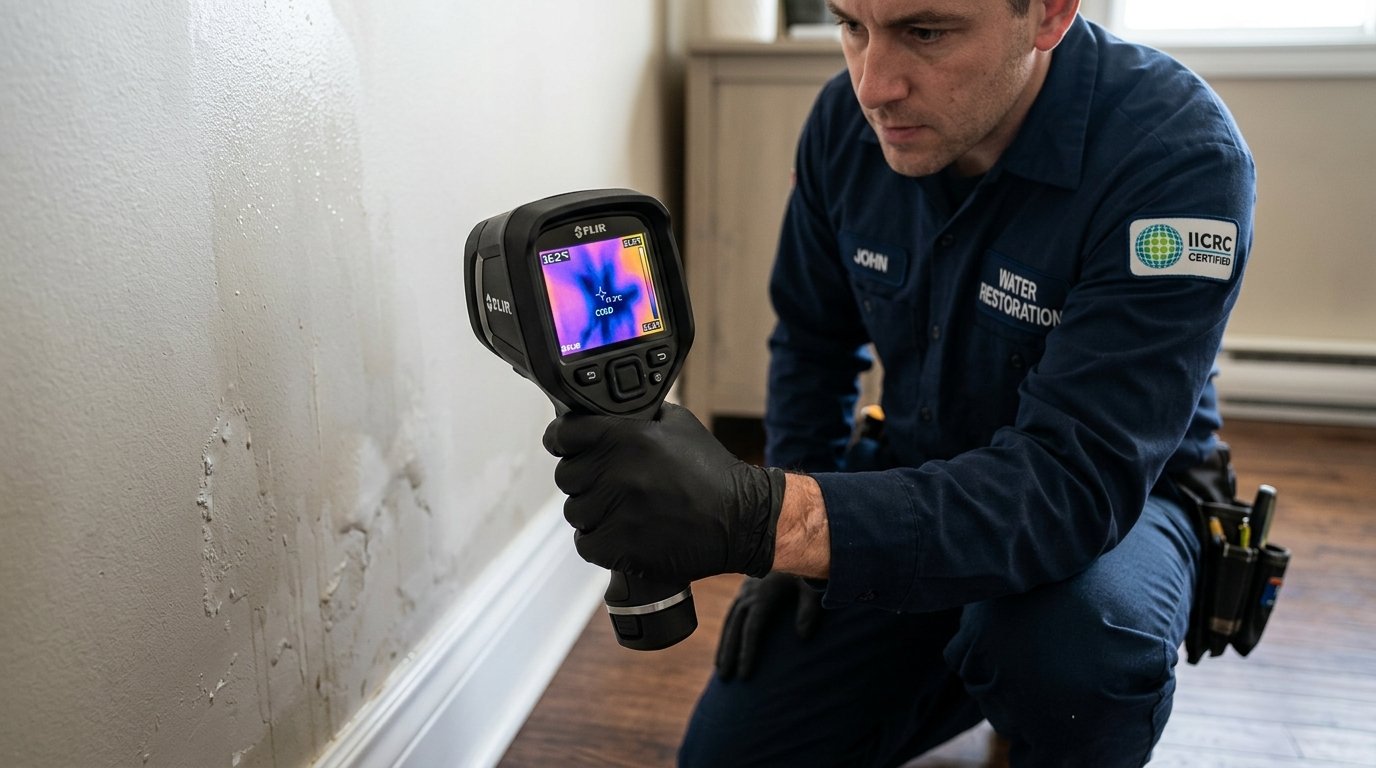
A strong musty or sour odor, elevated moisture meter readings (>16%), or thermal camera cold patterns on drywall are strong indicators of active microbial colonization inside the wall cavity.
In Central Florida warm and humid climate, Stachybotrys chartarum spores can germinate within 24 to 48 hours of constant moisture exposure on cellulose drywall paper.

Dealing with Water Damage in Sanford Right Now?
Don't wait for moisture to turn into structural mold. Our certified response team arrives on-site in 30 minutes across Seminole County with truck-mounted extractors, thermal cameras, and industrial drying equipment.
Call 24/7 Emergency Dispatch: (407) 871-3490