
Florida Hurricane Water Damage: A Field Technician’s Emergency Guide
When a tropical storm or major hurricane makes landfall across Central Florida, sustained wind gusts make the evening news, but water intrusion accounts for more than 90% of total structural losses. As certified restoration technicians who have spent over 18 years wading through flooded living rooms, collapsed ceilings, and waterlogged subfloors in Sanford following hurricanes Ian, Nicole, and Irma, we have assembled this comprehensive, field-tested manual. Here is the exact technical blueprint for protecting your structure, isolating hazards, and ensuring your insurance mitigation claim is fully documented.
📋 Table of Contents & Technical Navigation
- Hydrological Dynamics of Central Florida Tropical Cyclones
- Attic and Building Envelope Failure Modes
- The 36-Hour Pre-Landfall Fortification Protocol
- The Critical 60-Minute Post-Storm Inspection Roadmap
- Florida Building Code Standards for Emergency Roof Tarping
- Psychrometric Sizing: S500 Drying Equations for Hurricane Losses
- Navigating Florida Insurance Claims: Wind-Driven Rain vs. NFIP Flood
- Printable Post-Hurricane Homeowner Action Checklist
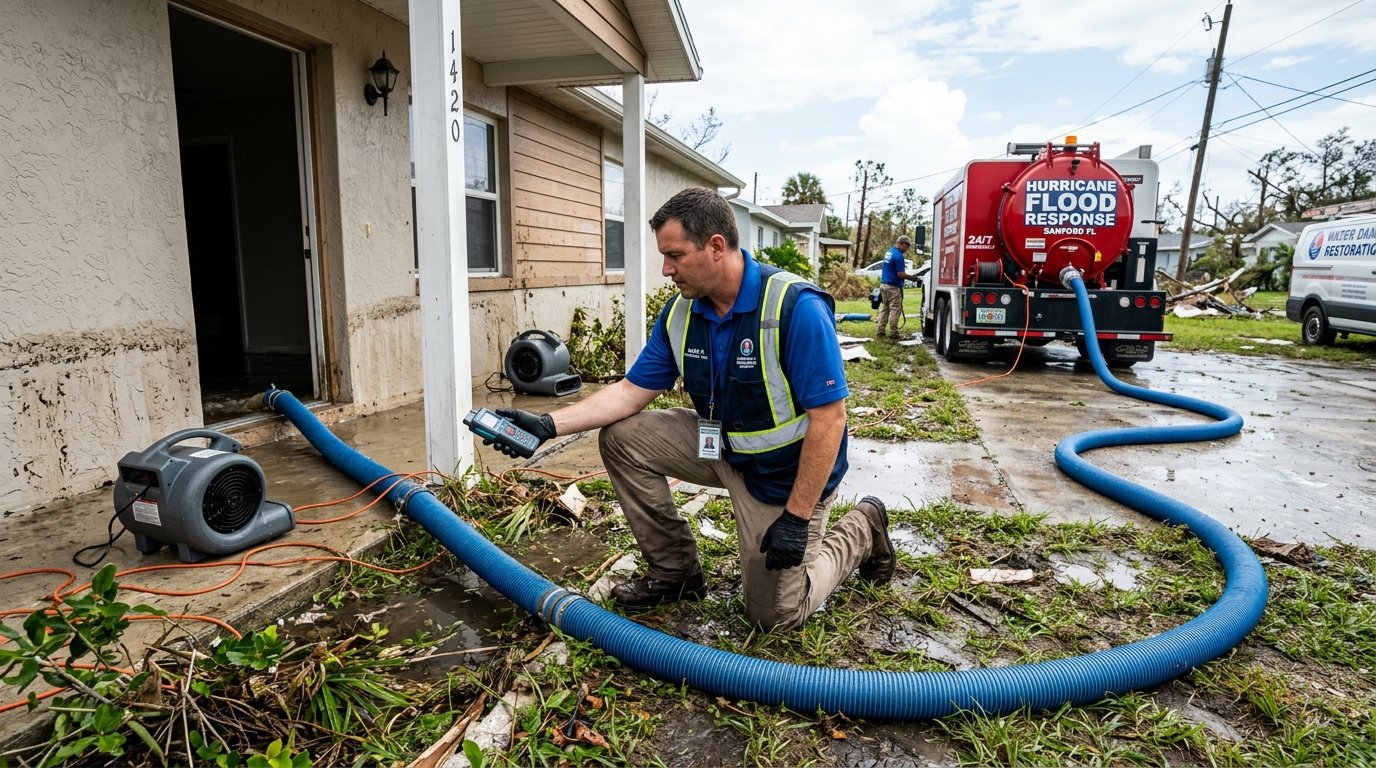
1. Hydrological Dynamics of Central Florida Tropical Cyclones
Seminole County's unique geographic position within the middle St. Johns River basin creates complex hydrological challenges during extreme weather events. The area surrounding Lake Monroe acts as a regional drainage basin for approximately 2,800 square miles of Central Florida watershed. When a slow-moving tropical cyclone dumps 10 to 18 inches of precipitation within 48 hours, several catastrophic moisture dynamics occur simultaneously:
- Saturated Water Table Hydrostatic Pressure: Central Florida shallow water tables quickly reach 100% saturation. When ground absorption stops, hydrostatic pressure builds beneath concrete slab-on-grade foundations, forcing groundwater through micro-fissures, expansion joints, and plumbing perimeter penetrations.
- Lake Monroe Basin Inundation: In historic waterfront neighborhoods along Seminole Boulevard and Downtown Sanford, lake levels rise dramatically, overcoming gravity-fed municipal stormwater flapper valves and inundating residential crawlspaces and floor systems. Check our dedicated Sanford Flood Cleanup Services for local water table dynamics.
- Horizontal Kinetic Rain Loading: Sustained gale-force winds exceeding 75 MPH propel rainfall horizontally at velocities that overwhelm building envelope systems engineered solely for vertical drainage.
💡 Technician Field Insight: The Sub-Slab Capillary Trap
In Florida homes built prior to 1995 without modern 15-mil poly vapor retarders beneath the concrete foundation, storm-saturated soil causes moisture vapor to wick upward through porous slab concrete via capillary action. Even after exterior floodwaters recede, the slab will continue exuding moisture into hardwood and carpet for weeks unless deep desiccant drying is applied.
2. Attic and Building Envelope Failure Modes
During hurricane conditions, building envelope failures follow predictable mechanical sequences that property owners must recognize:
- Soffit Vent Blowout & Reverse Drafting: High positive pressure on windward walls forces perforated aluminum or vinyl soffits to collapse, allowing hundreds of gallons of rain directly into attic eaves. Negative pressure on the leeward roof ridge simultaneously pulls moisture through ridge vents.
- Plywood Sheathing Uplift: Extreme aerodynamic uplift forces strip asphalt architectural shingles and synthetic underlayment, exposing the 1/2-inch CDX plywood roof decking. Once roof decking nails pull free, open joints allow torrential rainwater directly onto ceiling drywall assemblies.
- Sliding Glass Door Track Overflow: Most residential sliding patio doors feature bottom weep holes rated for up to 50 MPH wind-driven rain. Above 70 MPH, internal track water pressure exceeds drainage capacity, flooding adjacent carpet, luxury vinyl plank (LVP), and baseboards.
3. The 36-Hour Pre-Landfall Fortification Protocol
Executing proactive defensive measures prior to storm landfall significantly reduces internal flooding severity and protects your insurance claim viability:
Emergency Pre-Storm Protection Action Items:
- Gutter Clearing & Downspout Extensions: Ensure all eavestroughs are 100% free of oak leaves and Spanish moss. Install 10-foot flexible downspout extensions to direct massive roof runoff far away from the foundation perimeter.
- Pyramid Sandbag Stacking at Ingress Points: When deploying sandbags against exterior sliding doors or garage entries, use the 3-2-1 pyramid stacking method wrapped in continuous 6-mil poly sheeting to form a watertight dam.
- Sump Pump & Battery Auxiliary Testing: Verify that sub-floor drainage pumps operate smoothly. Test the 12V deep-cycle marine auxiliary battery backup systems to ensure pumping continues during municipal power grid outages.
- Main Water Supply Lockout: If evacuating, close the main domestic water ball valve near the water meter. If storm-damaged tree roots shift underground supply lines, your home will not suffer high-pressure internal flooding.
- Timestamped Photographic Asset Inventory: Capture a continuous 4K video walkthrough documenting ceiling conditions, wall finishes, baseboard alignments, and serial numbers on major appliances.
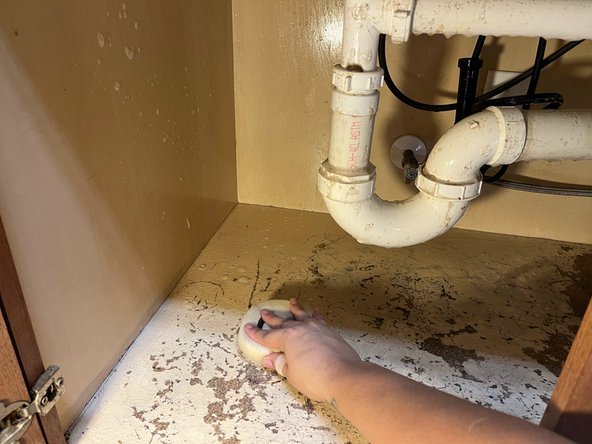
4. The Critical 60-Minute Post-Storm Inspection Roadmap
The moment emergency management authorities declare tropical storm conditions have passed, the first 60 minutes determine whether your property can be stabilized or suffers permanent structural rot:
De-Energize Inundated Electrical Circuits
Never walk through standing water if water levels have reached baseboard outlets or floor receptacles. Switch off main electrical breakers from an entirely dry vantage point. If the electrical service panel is wet, contact Duke Energy or a licensed electrician before touching the panel.
Determine Contamination Category (IICRC S500)
Identify whether the water intrusion represents clean rainwater (Category 1), greywater from appliance discharge (Category 2), or hazardous overland floodwater carrying municipal sewer backflow (Category 3). Read our Category 3 Blackwater Safety Guide for pathogen handling protocols.
Deploy High-Capacity Liquid Extraction
Standing water must be mechanically extracted within 2 to 4 hours. Every hour water sits against drywall, it wicks upward through porous gypsum paper at rates exceeding 2 to 3 inches per hour. Call our Storm Recovery Dispatch for rapid truck extraction.
5. Florida Building Code Standards for Emergency Roof Tarping
Under the Florida Building Code (Residential Section R301.2) and standard insurance policy terms, homeowners have a contractual duty to mitigate secondary damage. When roof decking is compromised, emergency weatherproofing must adhere to strict installation protocols:
Tarps must consist of minimum 10-mil industrial woven polyethylene with UV inhibitors. The tarp must extend a minimum of 36 inches past the damaged roof perimeter and wrap cleanly over the roof ridge to prevent wind uplift. Never nail tarps directly through shingles with roofing nails; doing so creates hundreds of puncture holes. Instead, wrap the edges around 2x4 spruce furring strips and screw the batten boards through the rafters using 3-inch exterior screws.
6. Psychrometric Sizing: S500 Drying Equations for Hurricane Losses
Restoring a hurricane-damaged home is a science governed by psychrometrics (the thermodynamic properties of moist air). Under ANSI/IICRC S500 standards, hurricane flooding typically represents a Class 3 or Class 4 Water Loss (water coming from overhead and saturating deep structural materials):
| Water Loss Class | S500 Dehumidifier Sizing Formula (AHAM PPD) | Air Mover Sizing Calculation | Target Relative Humidity |
|---|---|---|---|
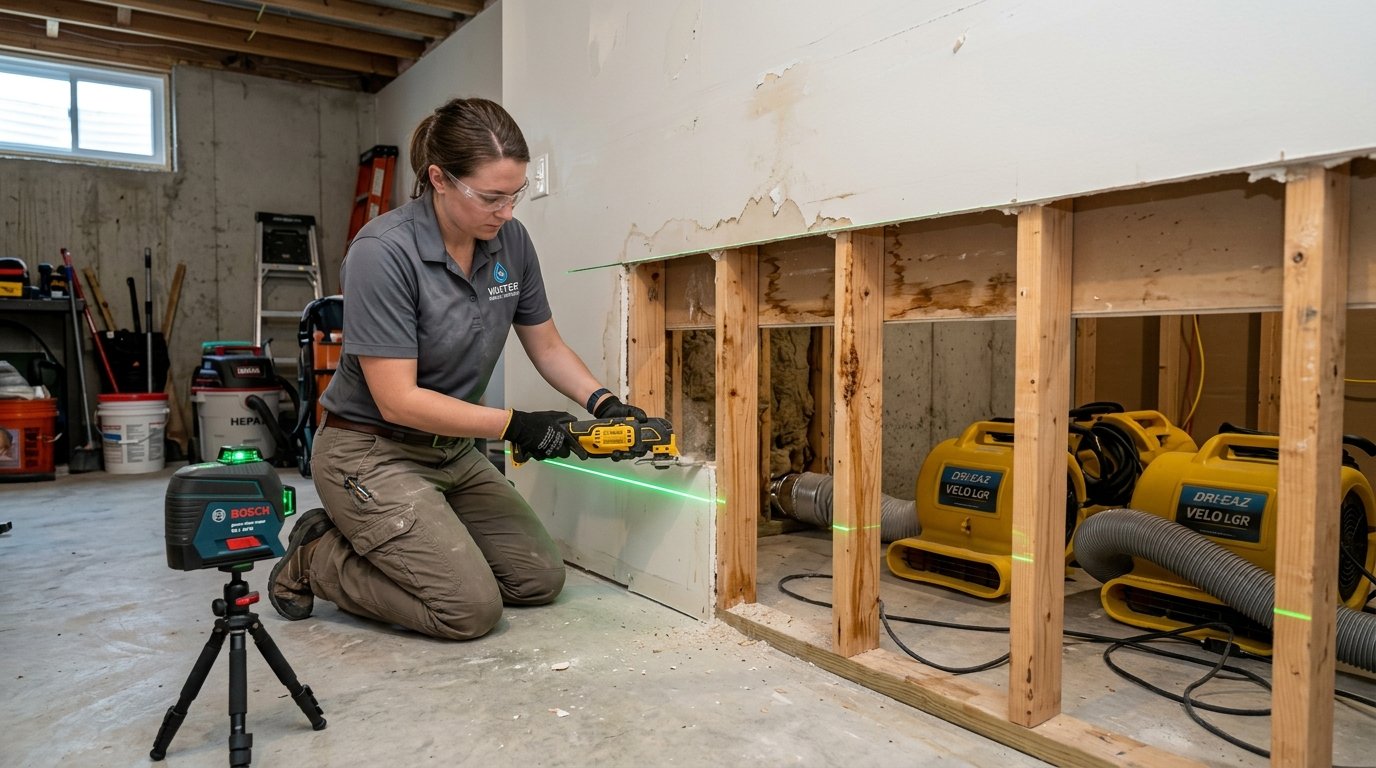
| Class 3 (Ceiling & Walls Saturated) | Total Room Volume (Cu Ft) ÷ 30 = Required AHAM Pints/Day Extraction Capacity | 1 Axial Air Mover per 50-70 Sq Ft of wet floor area + 1 per wall cavity | Maintain 30% to 40% RH (Below 34 GPP) |
| Class 4 (Deep Bound Water in Hardwood/Slabs) | Total Room Volume (Cu Ft) ÷ 20 = Required Industrial Desiccant CFM | Dedicated Injectidry floor mat systems under negative vacuum | Maintain < 25% RH (< 20 GPP) |
7. Navigating Florida Insurance Claims: Wind-Driven Rain vs. NFIP Flood
Understanding policy language is vital following a Central Florida hurricane. Standard homeowners insurance (HO-3 / HO-6) and National Flood Insurance Program (NFIP) policies operate under completely distinct legal frameworks:
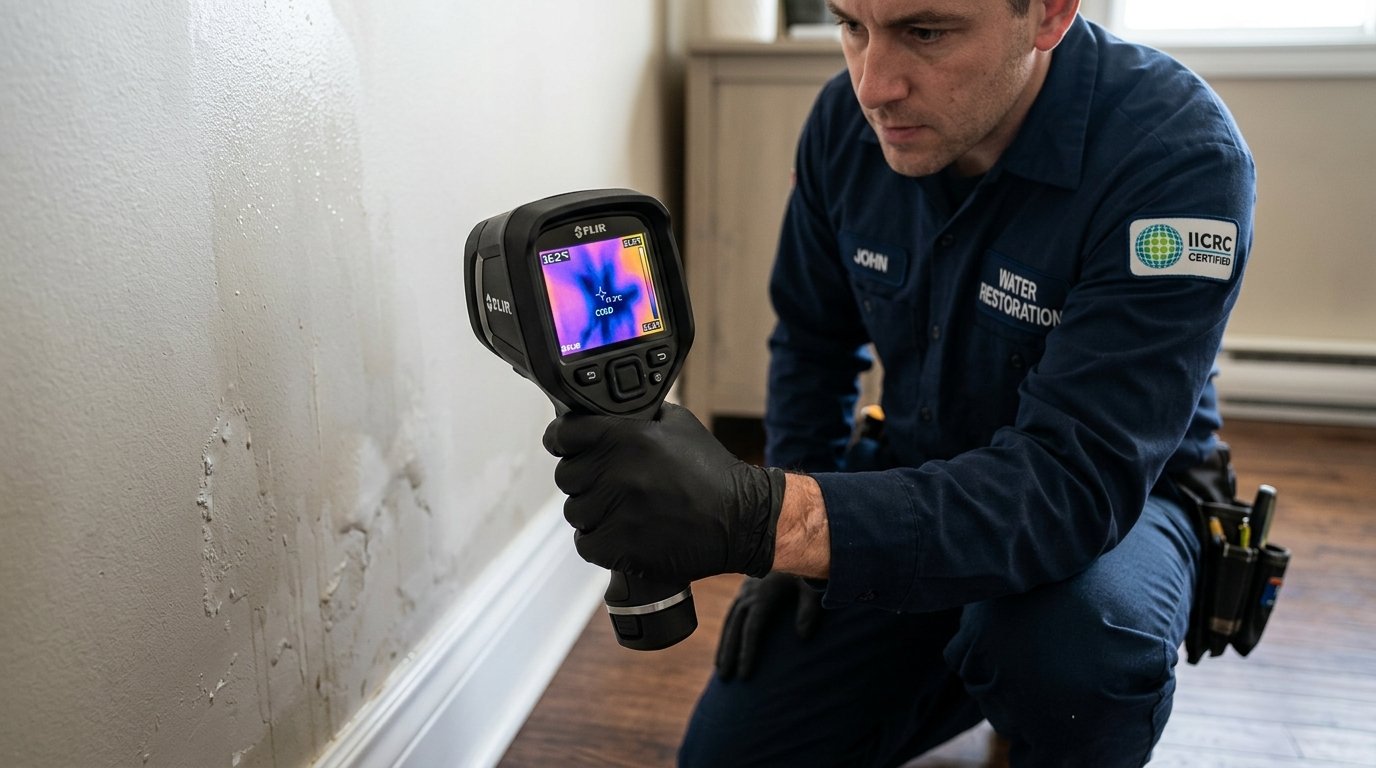
- The Anti-Concurrent Causation Clause: Many private Florida policies contain clauses stating that if wind damage and flood damage occur concurrently, the carrier may attempt to deny the entire loss. To defeat this, our team provides date-stamped moisture mapping, thermal imaging scans, and photographic proof identifying the exact storm-created roof opening. Read our complete Insurance Claims Guide.
- Proof of Loss Deadlines: Standard NFIP flood claims require an exhaustive, itemized Proof of Loss statement submitted within 60 days of the disaster event.
- Xactimate Itemization: Certified mitigation estimates must be broken down by standard unit cost codes (e.g. `WTR DRY`, `WTR EXTR`, `WTR FDMG`) matching Seminole County regional labor rates.
8. Printable Post-Hurricane Homeowner Action Checklist
Step-by-Step Post-Hurricane Action Checklist:
- 1. Safety Lockout: Confirm power is off in flooded areas; check for structural sagging in ceilings before walking underneath.
- 2. Photographic Logging: Take at least 50 photos and 3 high-definition walkthrough videos before touching any damaged contents.
- 3. Emergency Dispatch: Call our 24/7 Sanford restoration dispatch at (407) 871-3490 for truck-mounted extraction and commercial drying placement.
- 4. File First Notice of Loss (FNOL): Contact your property insurer immediately to secure your official claim number and adjuster assignment.
- 5. Establish Moisture Logs: Ensure your restoration contractor maintains daily psychrometric dry logs (ambient temp, RH, GPP, and moisture % MC) to validate drying coverage.
Frequently Asked Questions (Field Insights)
Standard HO-3 homeowners insurance covers water entering from above due to wind damage (e.g. blown-off roof shingles). However, rising water from lakes, rivers, or street runoff is classified as flood damage and requires a separate NFIP or private flood insurance policy.
Emergency tarping should be secured within 12 to 24 hours of storm clearance to stop subsequent tropical afternoon rain from completely destroying ceiling drywall and structural joists.
No. Saturated fiberglass and cellulose insulation compacts, permanently losing its thermal R-value while trapping moisture against wooden ceiling framing. Saturated insulation must be safely extracted, the cavity disinfected, and new insulation installed.
In Central Florida warm and humid climate, dormant mold spores germinate within 24 to 48 hours. Delaying mitigation transforms a simple clean water extraction into a hazardous, costly biohazard mold remediation project.

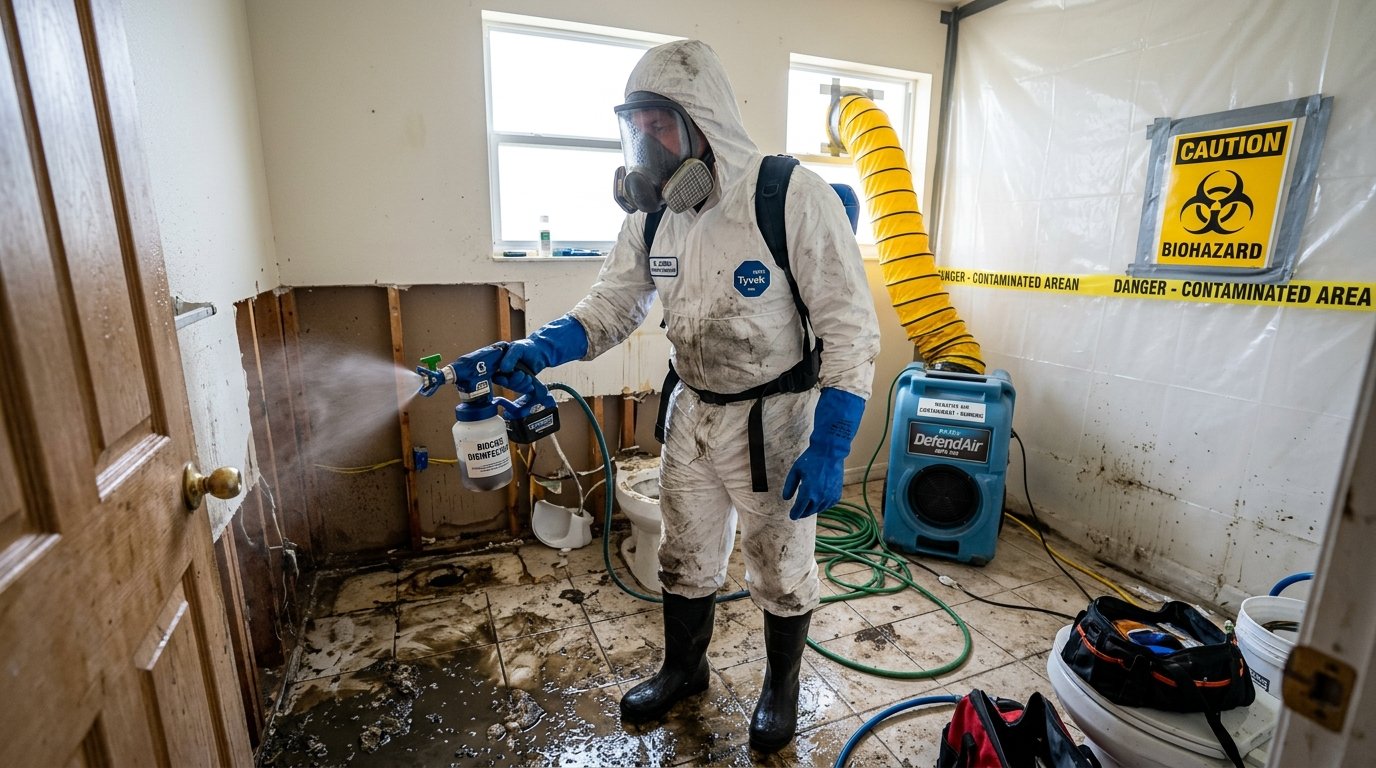
Dealing with Water Damage in Sanford Right Now?
Don't wait for moisture to turn into structural mold. Our certified response team arrives on-site in 30 minutes across Seminole County with truck-mounted extractors, thermal cameras, and industrial drying equipment.
Call 24/7 Emergency Dispatch: (407) 871-3490