
The Danger of Category 3 Blackwater: Why DIY Sewage Cleanup Fails
When a municipal sewer line backs up into your bathroom or Lake Monroe storm runoff overflows across your living room floor, you are not dealing with dirty water; you are dealing with Category 3 Blackwater. Under the ANSI/IICRC S500 standard, blackwater is a severe biohazard packed with lethal pathogens, enteric viruses, endotoxins, and heavy metals. Here is the technical breakdown of blackwater microbiology, containment physics, and why grocery-store bleach cannot disinfect saturated structural materials.
📋 Table of Contents & Technical Navigation
- The ANSI/IICRC S500 Water Classification Standards
- Microbiological Taxonomy of Raw Sewage & Storm Floodwater
- Why Sodium Hypochlorite (Bleach) Fails on Porous Framing
- Containment Engineering: Negative Pressure & HEPA 500 Dynamics
- Level C Biohazard Personal Protective Equipment (PPE) Standards
- Porous vs. Non-Porous Structural Materials Decision Matrix
- The 6-Phase Certified IICRC Decontamination Protocol
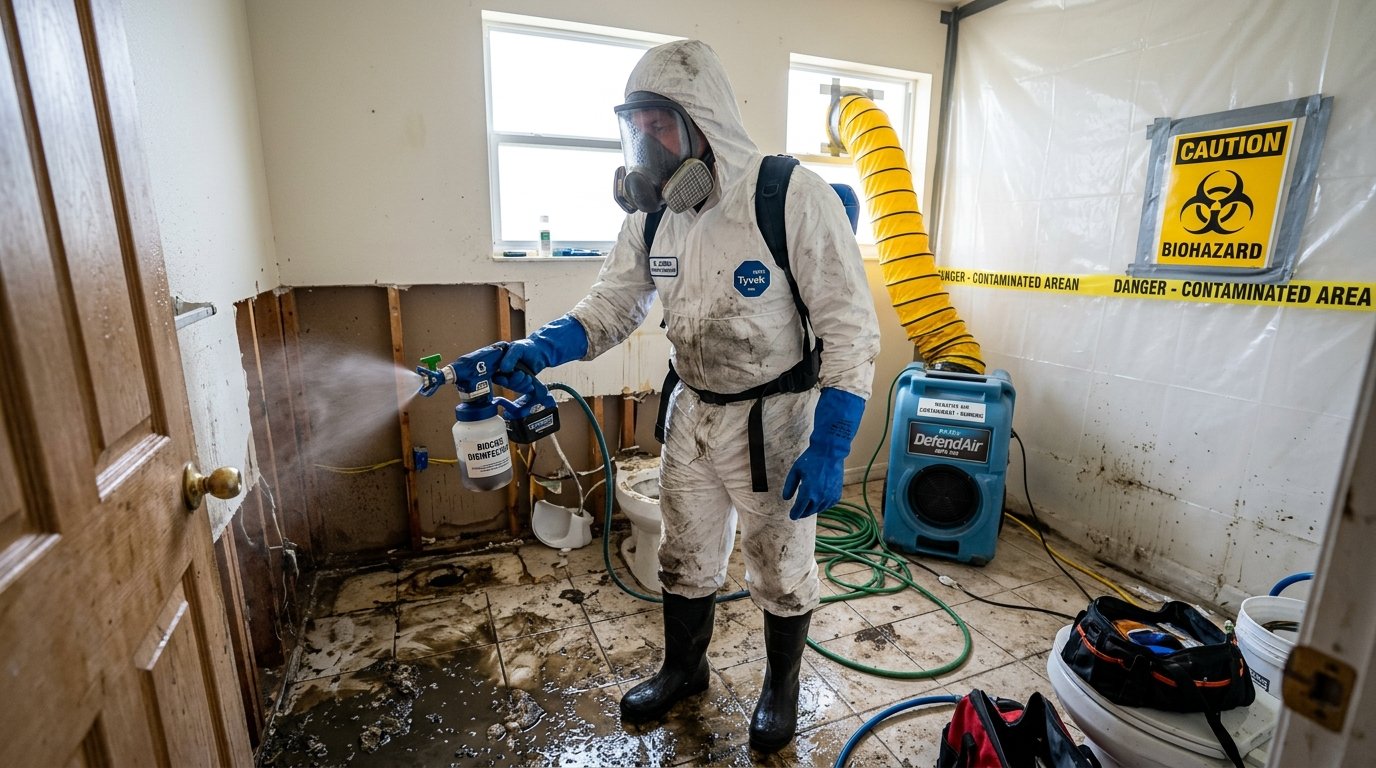
1. The ANSI/IICRC S500 Water Classification Standards
The Institute of Inspection, Cleaning and Restoration Certification establishes clear contamination thresholds that govern insurance billing and health safety protocols:
Originates from broken domestic supply pipes, clean sink overflows, or melting ice. Safe for brief human contact. Degradation Alert: In Florida's 80°F+ ambient indoor temperatures, bacterial populations double every 20 minutes, rapidly degrading Category 1 water into Category 2 or 3 within 24 to 48 hours.
Contains significant chemical, biological, or physical contaminants capable of causing discomfort or illness. Sources include dishwasher discharge, washing machine overflows, or toilet bowl overflows containing urine.
Grossly contaminated water containing pathogenic agents, raw sewage, toxic organic chemicals, and agricultural runoff. All rising outdoor river floodwaters (Lake Monroe, St. Johns River) and sewer backflows are legally classified as Category 3 Blackwater.
💡 Critical Safety Rule: River and Lake Floodwater is Always Blackwater
Many property owners assume lake or storm runoff is clean "freshwater." In reality, overland runoff collects canine and wildlife fecal coliform, agricultural nitrogen fertilizers, roadway oils, and flooded municipal sewer manholes. It carries the exact same pathogenic risks as a raw toilet overflow.
2. Microbiological Taxonomy of Raw Sewage & Storm Floodwater
Microbiological laboratory analyses of Category 3 sewage and floodwater consistently find dangerous viral, bacterial, and parasitic pathogens:
- Enterotoxigenic Escherichia coli (E. coli O157:H7): Gram-negative bacteria that release Shiga toxins, causing acute hemorrhagic colitis, violent abdominal cramping, and life-threatening Hemolytic Uremic Syndrome (kidney failure).
- Salmonella enterica & Shigella dysenteriae: Enteric bacteria causing severe bacillary dysentery, prolonged high fevers, and chronic intestinal mucosal damage.
- Hepatitis A & Norovirus: Extremely resilient non-enveloped viral pathogens capable of surviving on damp wood framing for over 30 days, causing acute viral hepatitis and debilitating gastroenteritis.
- Cryptosporidium parvum & Giardia lamblia: Microscopic protozoan oocysts with protective outer protein shells that are 100% immune to standard chlorine concentrations, causing months of chronic digestive malabsorption.
- Endotoxins: Lipopolysaccharides released from the cell walls of dying gram-negative bacteria that cause acute respiratory inflammation and toxic systemic fever upon aerosol inhalation.
3. Why Sodium Hypochlorite (Bleach) Fails on Porous Framing
When raw sewage overflows, the most common mistake homeowners make is pouring grocery-store bleach (5.25% sodium hypochlorite) onto wet flooring. Here is the chemical reality:
- Surface Tension & Evaporation Ratios: Household bleach is 94% water. The chlorine ions react instantly with organic surface proteins and evaporate off in minutes, while the water carrier penetrates deep into porous drywall paper and wood grain, feeding bacterial colonies underneath.
- Aerosolization Hazards with Non-HEPA Vacuums: Using standard shop vacuums or household box fans atomizes millions of microscopic virus and bacteria particles straight into central HVAC ductwork, contaminating every room in the structure.
- Lethal Chloramine Vapor Generation: Mixing sodium hypochlorite with ammonia compounds naturally abundant in sewage produces toxic chloramine gas (NH2Cl), causing severe chemical pneumonitis and acute respiratory damage.
4. Containment Engineering: Negative Pressure & HEPA 500 Dynamics
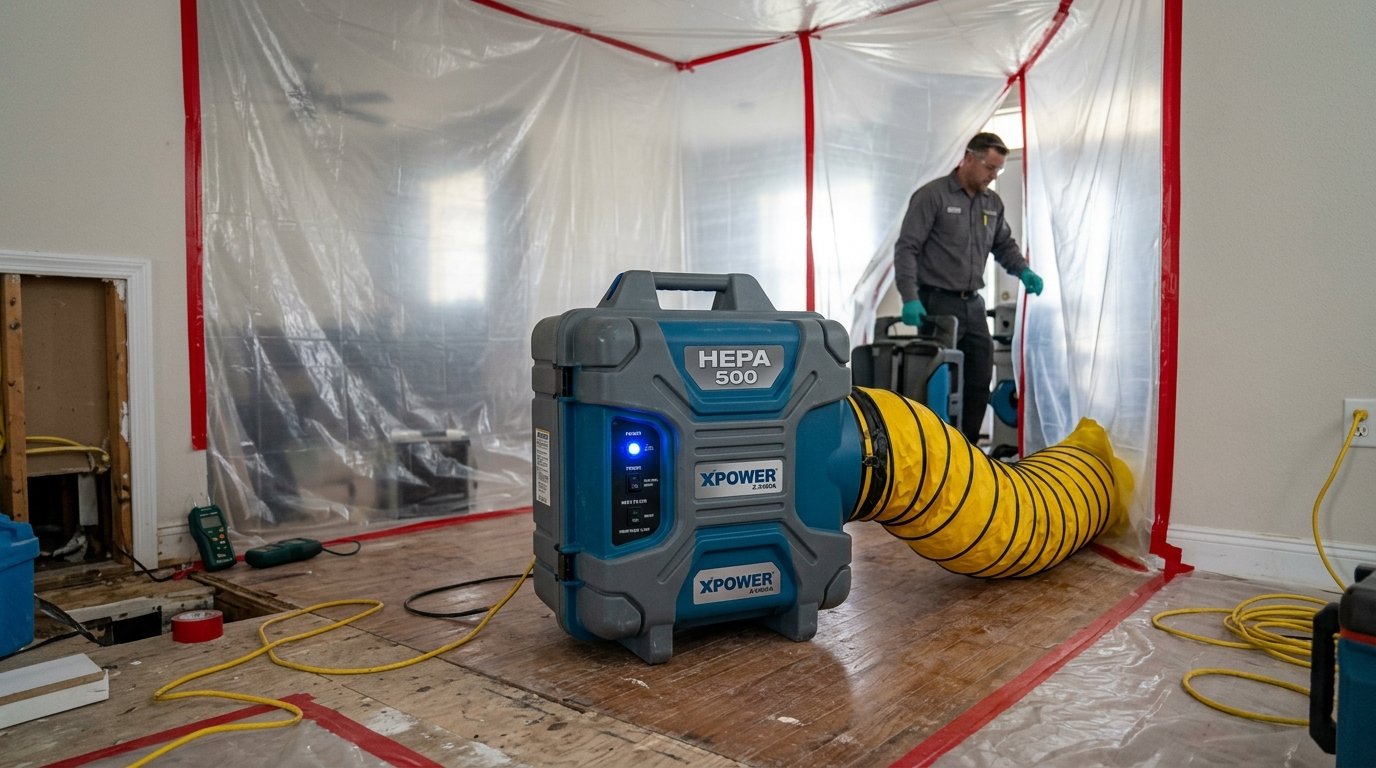
Professional blackwater mitigation requires rigorous physical isolation. Our crews construct airtight 6-mil flame-retardant polyethylene barriers equipped with magnetic zipper entry airlocks. We install industrial HEPA 500 Negative Air Machines exhausting directly outside through layflat ducting.
By maintaining a continuous negative pressure differential of -0.02 inches of water column (inWC) measured with digital manometers, air from unaffected rooms is drawn into the containment zone, completely preventing airborne bio-aerosols from escaping. For immediate help, check our Sanford Sewage Cleanup Services.
5. Level C Biohazard Personal Protective Equipment (PPE) Standards
Under OSHA 29 CFR 1910.120 and IICRC S500 standards, technicians remediating Category 3 blackwater must maintain Level C personal protective standards:
- Chemical Protective Ensembles: Full-body hooded DuPont Tyvek 400 coveralls taped at wrists and ankles over boots.
- Respiratory Protection: NIOSH-approved N95 or full-face Powered Air-Purifying Respirators (PAPR) equipped with organic vapor and HEPA particulate cartridges.
- Dermal & Footwear Barrier: Heavy-gauge 15-mil chemical-resistant nitrile inner gloves paired with outer cut-resistant gloves, and seamless steel-toed rubber hazmat boots.
6. Porous vs. Non-Porous Structural Materials Decision Matrix
Building materials affected by Category 3 blackwater are categorized strictly by porosity under IICRC S500 protocols:
| Building Material | Porosity Rating | IICRC S500 Protocol | Restorability Status |
|---|---|---|---|
| Carpet & Rebond Foam Padding | Highly Porous | Immediate bagging in 6-mil biohazard bags; manifest disposal. | NON-SALVAGEABLE • Discard |
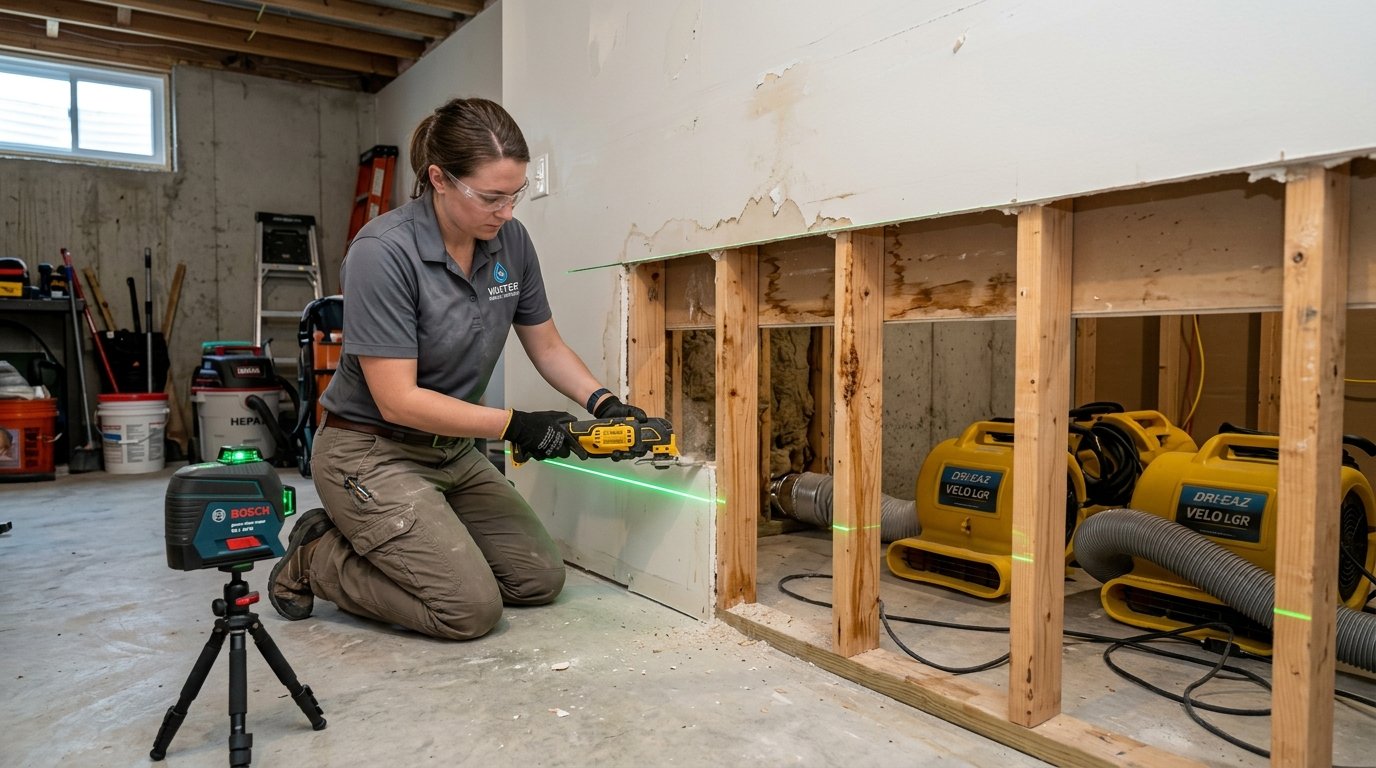
| Gypsum Drywall & Fiberglass Batt | Porous | Laser flood cut 24" above waterline; remove all cavity insulation. | NON-SALVAGEABLE • Discard |
| Solid 2x4 Wood Studs & Plates | Semi-Porous | Abrasive pressure washing, biocide saturation, LGR desiccation. | SALVAGEABLE • Fully Restorable |
| Structural Concrete Slab & Tile | Non-Porous | High-pressure extraction, hospital-grade quaternary biocide scrubbing. | SALVAGEABLE • 100% Restorable |
7. The 6-Phase Certified IICRC Decontamination Protocol
- Phase 1: Engineering Controls & Containment: Erect 6-mil poly containment barriers, establish negative pressure (-0.02 inWC), and seal HVAC registers.
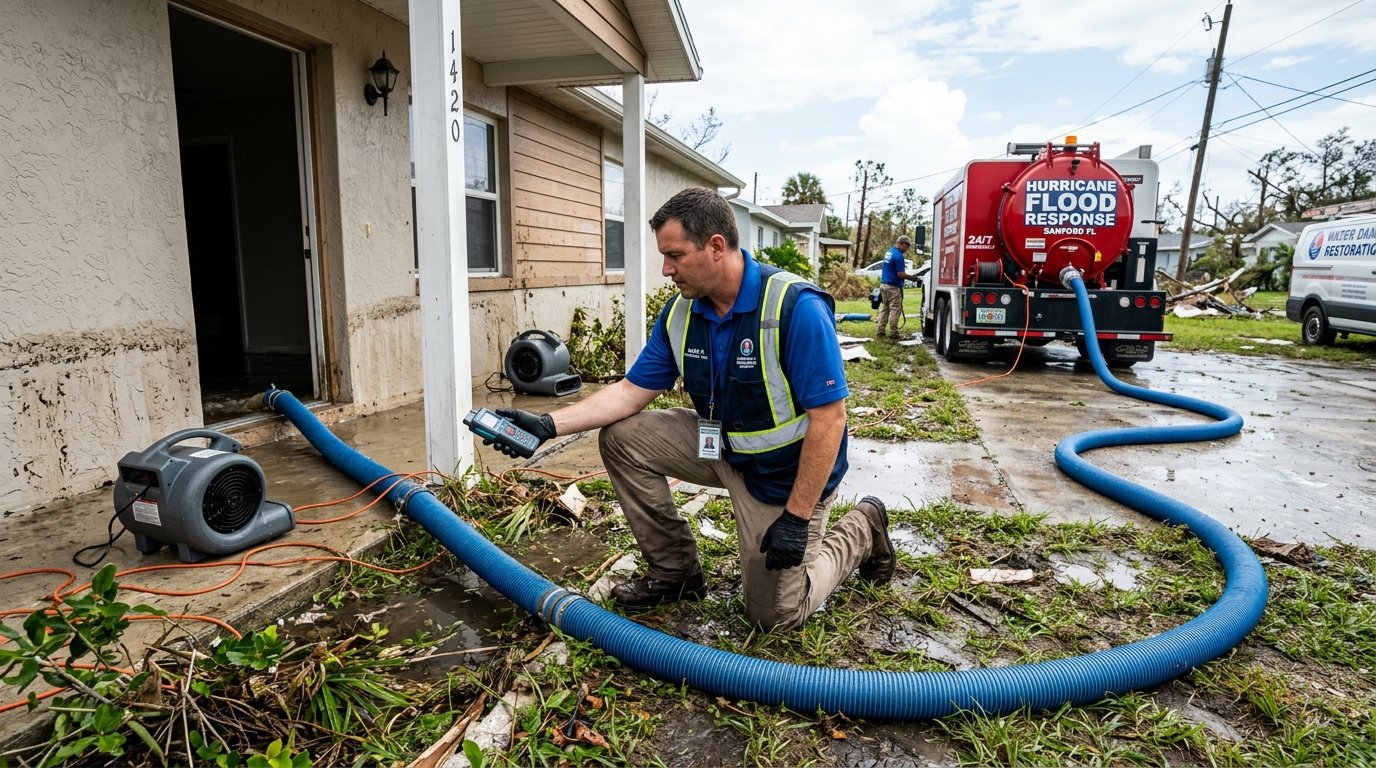
- Phase 2: Bulk Extraction: Deploy commercial truck-mounted vacuum units to pump out gross liquid and solid contaminants.
- Phase 3: Controlled Demolition: Execute precision 24-inch drywall flood cuts and bag saturated flooring as biohazardous waste.
- Phase 4: Pressure Washing & Biocide Saturation: Treat all framing with EPA-registered botanical thymol antimicrobials (Benefect Decon 30) maintaining 10-minute wet contact time.
- Phase 5: Psychrometric Desorption: Run industrial LGR dehumidifiers until electronic pin meters verify framing moisture < 12% MC.
- Phase 6: Post-Remediation Verification (PRV): Perform ATP bioluminescence testing to confirm 0 Relative Light Units (RLU) on sanitized structural wood surfaces.
Frequently Asked Questions (Field Insights)
Under ANSI/IICRC S500 standards, porous carpet backing and foam padding that have absorbed Category 3 blackwater cannot be safely disinfected and must be removed and discarded as biohazardous waste.
Yes. All rising outdoor floodwater from lakes, rivers (such as Lake Monroe or St. Johns River), and storm runoff is legally classified as Category 3 Blackwater due to animal feces, fertilizer chemicals, and sewer overflow.
Certified technicians must wear full-body impervious Tyvek suits, N95 or full-face PAPR respirators, heavy-duty chemical nitrile gloves, and steel-toed rubber boots to prevent skin contact and bio-aerosol inhalation.
Standard homeowners policies require a specific "Water Backup & Sump Overflow" endorsement rider to cover sewage backups. Our team works directly with all Florida insurance carriers to verify policy coverage and handle Xactimate billing.

Dealing with Water Damage in Sanford Right Now?
Don't wait for moisture to turn into structural mold. Our certified response team arrives on-site in 30 minutes across Seminole County with truck-mounted extractors, thermal cameras, and industrial drying equipment.
Call 24/7 Emergency Dispatch: (407) 871-3490