
How Long Does Structural Drying Really Take? (The 3 to 5 Day Science)
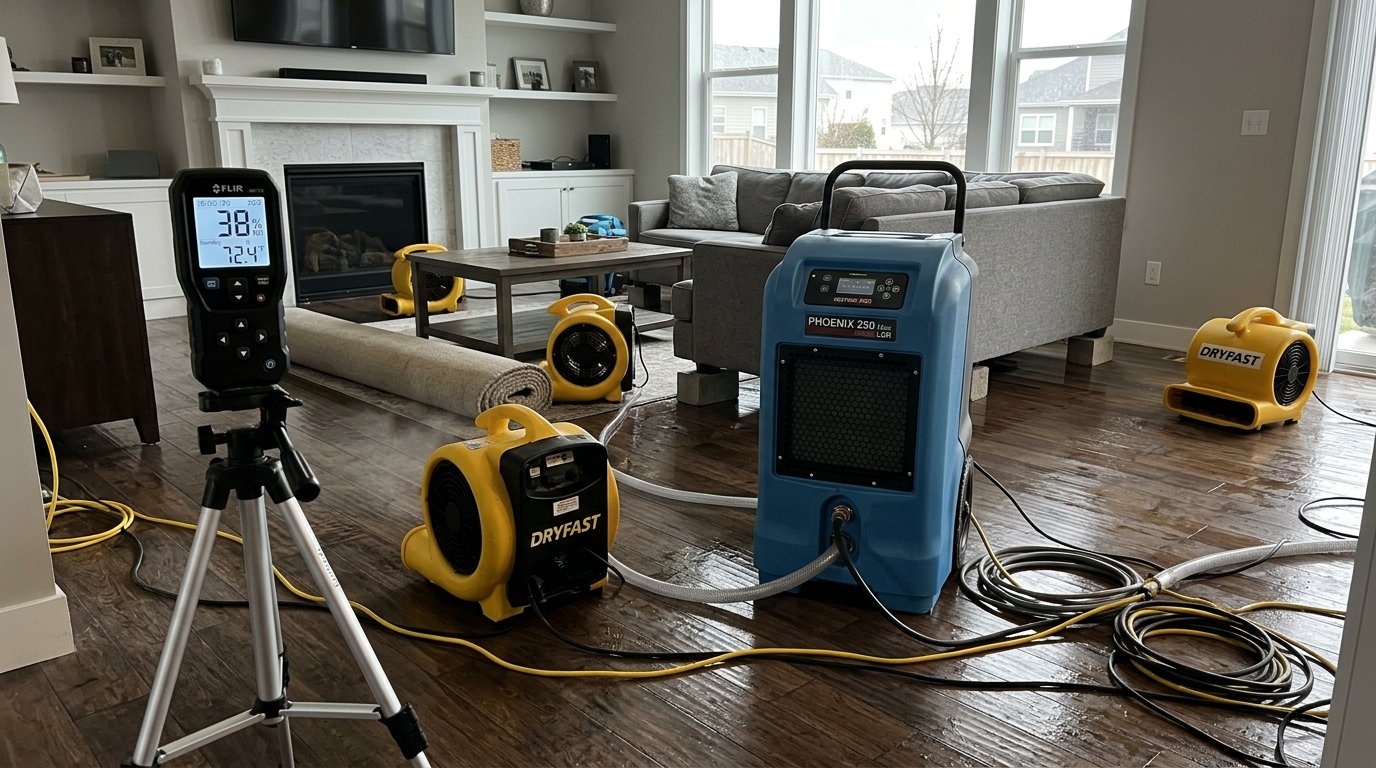
Once the standing water is pumped out of your home, the next big question is always: "How many days will these noisy drying fans have to run?" Structural drying is not a guessing game; it is governed by psychrometrics (the science of drying air, temperature, and vapor pressure). Here is the realistic timeline, mathematical equations, and moisture meter readings for drying a flooded home in Central Florida's humid climate.
📋 Table of Contents & Technical Navigation
- The Scientific Principles of Psychrometric Drying
- The 72-to-120 Hour Day-by-Day Structural Drying Schedule
- Boundary Layer Physics: Why Standard Box Fans Fail in Florida
- LGR Dehumidifiers vs. Industrial Desiccant Systems
- Establishing and Verifying the Equilibrium 'Dry Standard'
- Drying Complex Assemblies: Hardwood, Concrete Slabs & Multi-Layers
1. The Scientific Principles of Psychrometric Drying
Restoration drying is governed by the laws of thermodynamics. Water exists in building materials in two distinct states: free water (standing liquid water in pores) and bound water (water chemically held within wood cellular structures and gypsum crystals).
Drying occurs when we establish a steep Vapor Pressure Differential. Vapor pressure is the force exerted by water molecules in the air, measured in inches of mercury (inHg). Water naturally migrates from areas of high vapor pressure (wet building framing) to areas of low vapor pressure (artificially dry room air). By driving specific humidity down to ultra-low Grains Per Pound (GPP), commercial dehumidifiers literally pull bound moisture out from the core of solid 2x4 framing studs.
2. The 72-to-120 Hour Day-by-Day Structural Drying Schedule
Under standard conditions in Central Florida, complete scientific structural drying requires 3 to 5 days (72 to 120 hours) of continuous industrial dehumidification:
| Day | Drying Phase | Equipment & Action | Target Psychrometric Metric |
|---|---|---|---|
| Day 1 (0-24 hrs) | Bulk Extraction & Setup | Truck extractors pump liquid water; LGR dehumidifiers placed; baseboards removed. | Extract 90%+ liquid water; lower ambient RH from 95% to 50% (< 45 GPP). |
| Day 2 (24-48 hrs) | Surface Evaporation | Centrifugal air movers sweep moisture boundary layers off drywall and floors. | Drywall surface moisture drops from 40% to 20%; framing moisture begins dropping. |
| Day 3 (48-72 hrs) | Deep Desorption | High vapor pressure differential draws bound water from deep wood framing pores. | Wood stud moisture drops from 28% to 15%; ambient air maintained < 34 GPP. |
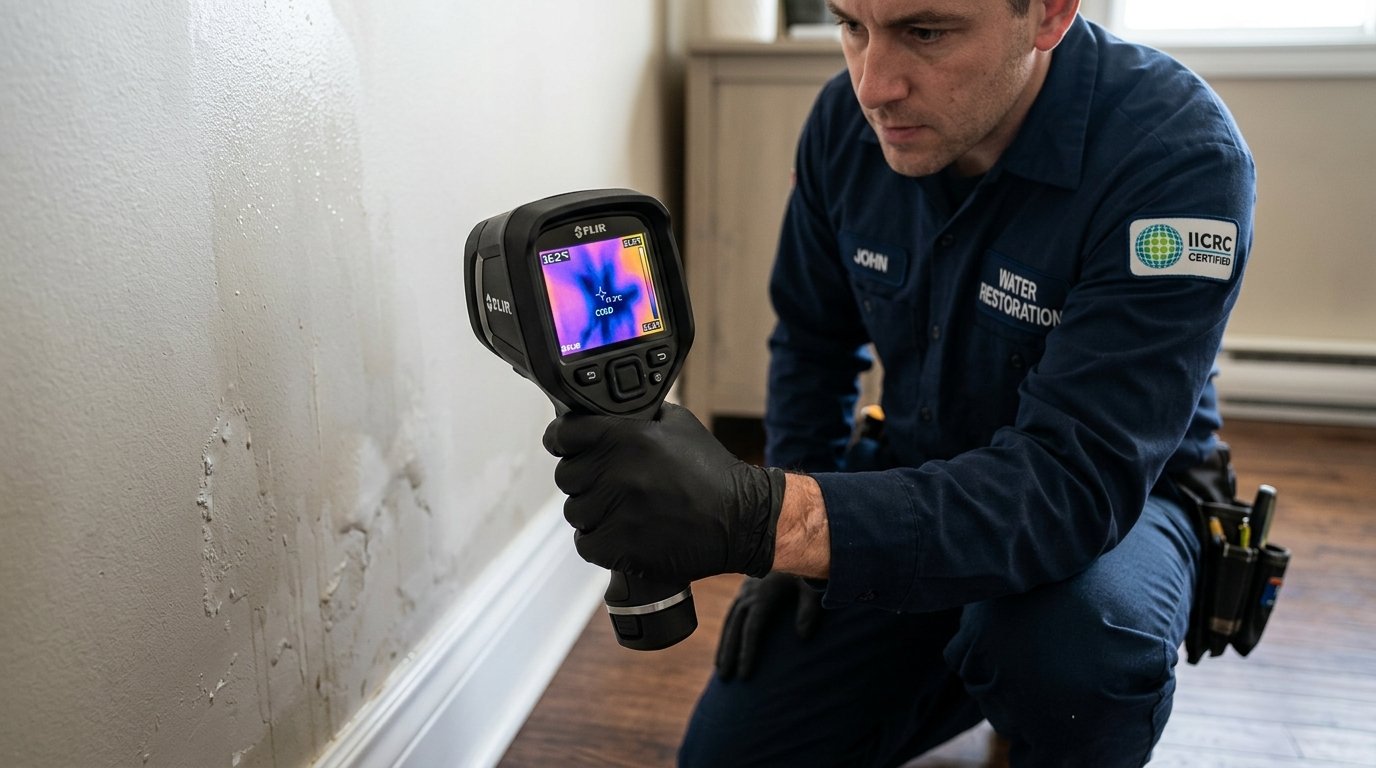
| Days 4 to 5 (72-120 hrs) | Equilibrium & Clearance | Thermal infrared verification, pin meter dry logging, equipment demobilization. | 100% dry baseline reached (< 12% MC in framing); sign-off for reconstruction. |
💡 Crucial Rule: Never Turn Off Drying Equipment at Night
Restoration equipment must run 24 hours a day without interruption. Turning off dehumidifiers at night causes "secondary wicking": moisture trapped deep in framing migrates back to the surface and relative humidity surges, resetting the drying clock.
3. Boundary Layer Physics: Why Standard Box Fans Fail in Florida
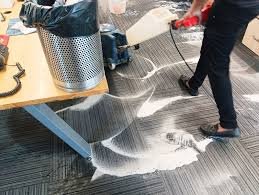
As water evaporates from a wet floor, it creates a microscopic cushion of cool, 100% saturated air directly on the material surface called the boundary layer. Without high-velocity industrial air movers blowing air at 45-degree angles to break this boundary layer, evaporation stops entirely.
Furthermore, Central Florida outdoor air carries 85% to 95% relative humidity. Opening windows pulls more water vapor into the building, causing secondary condensation on unaffected furniture and ceiling sheetrock.

4. LGR Dehumidifiers vs. Industrial Desiccant Systems
Certified restoration contractors deploy specialized dehumidification technologies tailored to the water loss class:
| Technology | Operating Principle | Lowest GPP Achieved | Best Applied In |
|---|---|---|---|
| Low Grain Refrigerant (LGR) | Pre-cools incoming air before evaporator coils, condensing maximum water vapor. | Down to 32 GPP. | Residential homes, standard drywall, living areas, basements. |
| Desiccant Dehumidifier | Passes air through chemical silica gel rotor wheels that adsorb moisture chemically. | Down to < 10 GPP. | Dense concrete slabs, hardwood floor drying mats, commercial warehouses. |
5. Establishing and Verifying the Equilibrium 'Dry Standard'
Technicians do not guess when a structure is dry by touch. During initial site inspection, moisture readings are recorded in an unaffected room of the same structure to establish a scientific Dry Standard Baseline (e.g., 9% MC in drywall, 11% MC in pine framing). Drying equipment operates until digital moisture meters verify affected areas match the baseline.
6. Drying Complex Assemblies: Hardwood, Concrete Slabs & Multi-Layers
- Hardwood Floor Cupping & Mat Systems: Saturated oak and heart-pine subfloors absorb water through bottom tongues. Technicians deploy Injectidry Floor Mat Systems that pull negative vacuum pressure through the hardwood pores, extracting water vapor from the subfloor without tearing out expensive wood flooring.
- Concrete Foundation Slab Desiccation: In Florida slab-on-grade homes, dense concrete absorbs moisture deeply and requires high-temperature LGR or desiccant drying for 5 to 7 days to prevent future glue failure under vinyl plank flooring.
- Attic Chases & Trusses: Unventilated roof framing requires dedicated desiccant ducting. See our Attic Cleanup Services.
Frequently Asked Questions (Field Insights)
No. Turning off drying equipment disrupts the vapor pressure gradient and allows moisture to wick back into structural framing, increasing mold risks and prolonging the total drying timeline.
Technicians use calibrated electronic pin-type and pinless moisture meters alongside FLIR thermal imaging cameras to verify internal wood stud and drywall moisture against unaffected dry baseline standards.
Controlled warm temperatures accelerate evaporation, but excessive heat in high humidity can accelerate mold growth. LGR dehumidifiers maintain the optimal scientific balance of 70°F to 85°F and ultra-low relative humidity.
Commercial LGR dehumidifiers remove between 16 and 30 gallons (60 to 110 liters) of water vapor from indoor air every 24 hours under active restoration conditions.

Dealing with Water Damage in Sanford Right Now?
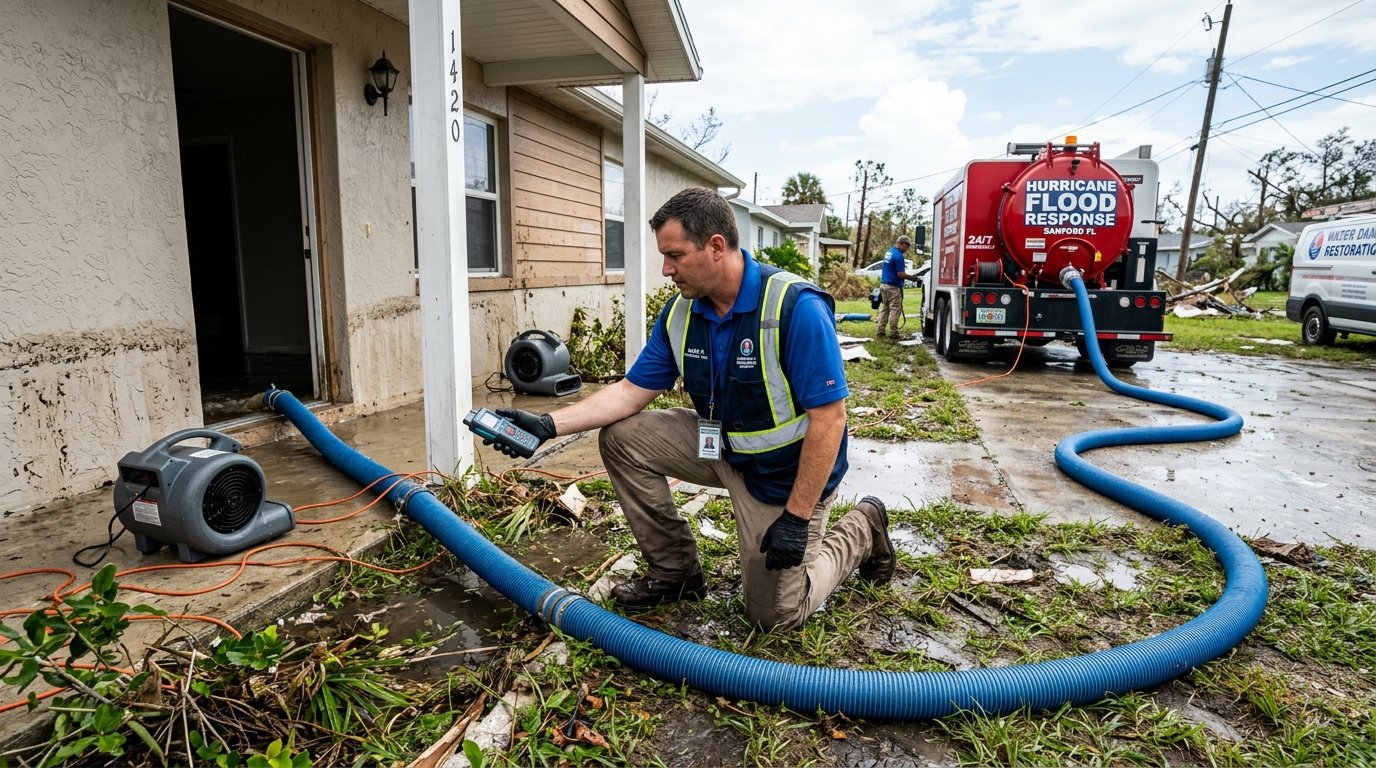
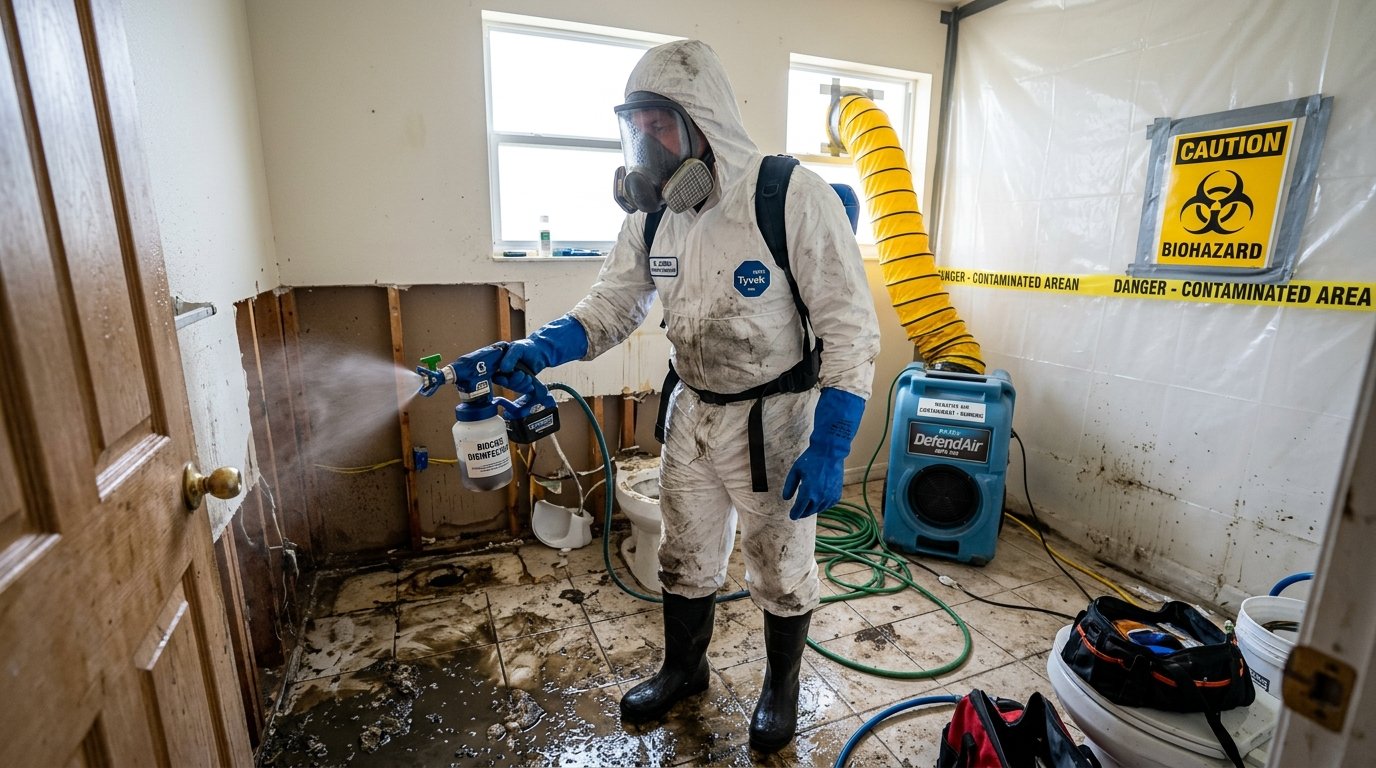
Don't wait for moisture to turn into structural mold. Our certified response team arrives on-site in 30 minutes across Seminole County with truck-mounted extractors, thermal cameras, and industrial drying equipment.
Call 24/7 Emergency Dispatch: (407) 871-3490